
RIM | REACTION INJECTION MOLDING
HIGH QUALITY, FLEXIBLE AND FUNCTIONAL.The technology with stunning design and customisation options for plastic trim parts.
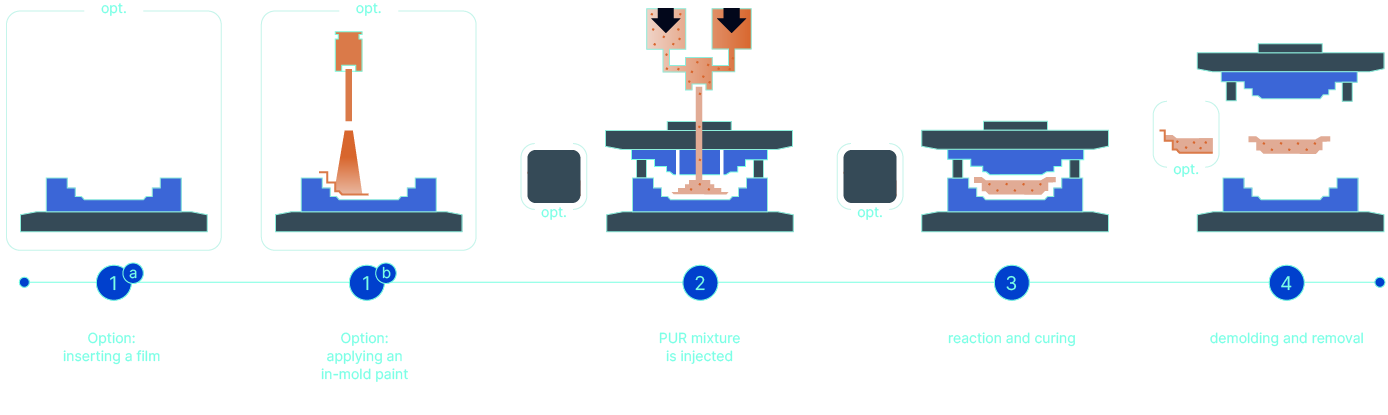
In the versatile RIM technology, polyols and isocyanates are mixed together using the counterflow injection principle. The foaming reaction mixture fills complex mould geometries, even of large components.
Component densities can be set differently. This creates a high degree of freedom for component functions and surfaces. In this way, high-quality textiles, for example, can be gently back-foamed directly in the mould. The result is economically attractive interior panelling components with textile surfaces and a pleasant feel.
Component densities can be set differently. This creates a high degree of freedom for component functions and surfaces. In this way, high-quality textiles, for example, can be gently back-foamed directly in the mould. The result is economically attractive interior panelling components with textile surfaces and a pleasant feel.
Large-surface exterior cladding components with a modern matt finish and excellent UV stability can also be produced by back-foaming a coating that is applied to the mould in advance.
The low reaction pressures also enable cost-efficient mould construction.
The low reaction pressures also enable cost-efficient mould construction.
- ATTRACTIVE
LIFE-TIME COSTS - LARGE
FREEDOM OF DESIGN - LOW
TOOL COSTS - MATT AND TEXTILE
SURFACES
THE ADVANTAGES OF RIM TECHNOLOGY
RIM (Reaction Injection Moulding) offers attractive lifetime costs for annual quantities of up to 5,000 units thanks to durable materials and efficient production processes.It allows great design freedom for complex and customised shapes and surfaces. Low mould costs make production economically attractive. In addition, matt and textile surfaces can be produced that are both visually appealing and functional.
How does Reaction Injection Moulding work?
Versatile surfaces for interior and exterior applications
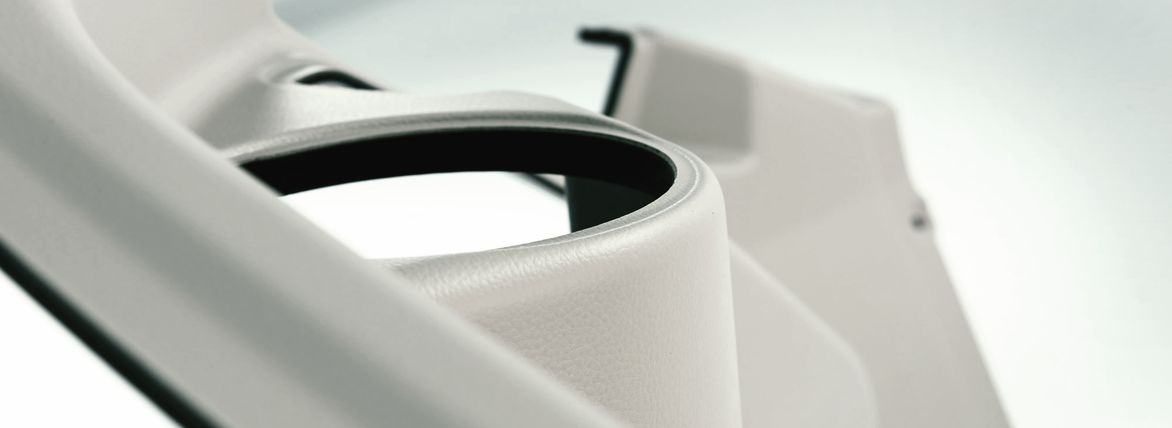
RIM enables a wide range of surface structures and designs for interiors and exteriors, whether smooth, glossy surfaces, textured, matt finishes or other customised solutions.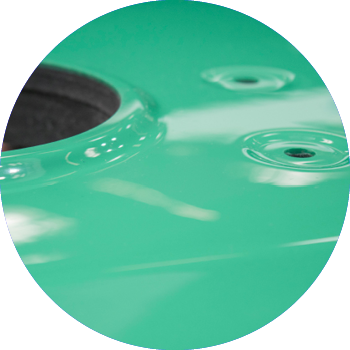
Class-A
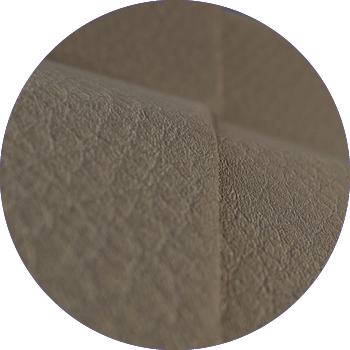
Softtouch
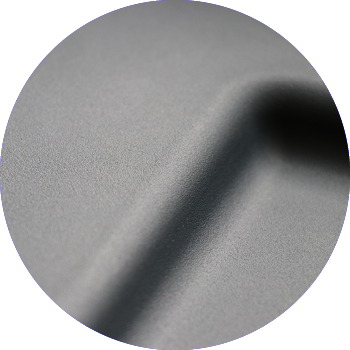
IMC

Coating
RIM IMC for exterior applications
RIM with PVC soft touch for interior applications
PARAT is the perfect partner
locations in Europe and Asia with RIM or (R)RIM machines
modern machines for RIM or (R)RIM
years of experience of RIM
Partnership from beginning to end
PARAT Technology is the safe choice for your project - we are at your side every step of the way, from the idea to the market launch.Our modern systems and the concentrated expertise of our employees guarantee first-class results at all times.

FULL-SERVICE PARTNER

Extensive Know-How

Modern
Machines

High supply
Reliability

FAQs about RIM
In the RIM process, two polyurethane components react chemically in a closed mold and expand into the finished part. Due to the low viscosity of the material, highly complex geometries and thin‑walled structures can be produced — with low tooling and system costs.
-
What is RIM technology and how does it work?
In the RIM process, two polyurethane components react chemically in a closed mold and expand into the finished part. Due to the low viscosity of the material, highly complex geometries and thin‑walled structures can be produced — with low tooling and system costs.
-
What advantages does RIM offer compared to injection molding?
RIM allows for similarly complex geometries as injection molding but at significantly lower processing pressures. This enables the use of aluminum tools, which are substantially more cost‑effective.
-
Which applications is RIM particularly suitable for?
Typical applications include covers, cladding and various exterior components for agricultural machinery, construction equipment, motorhomes, caravans and other commercial vehicles. It is particularly suitable where high design freedom, robust properties and economical tooling are required.
-
Which surface finishes can be achieved using the RIM process?
The RIM process enables a wide range of surface finishes — from foil‑laminated soft‑touch variants to post‑painted surfaces and in‑mold‑coating (IMC) finishes.
-
How large can components produced via the RIM process be?
Owing to low processing pressures and flexible mold sizing, the RIM process is highly suitable for producing large components.
-
Can inserts or attachments be integrated?
Yes. Inserts made from metal, plastic or composite materials can be positioned in the mold and foam‑integrated, resulting in multifunctional and assembly‑friendly components.
-
What material properties do RIM components offer?
RIM components offer high impact resistance, very good dimensional stability and excellent surface quality. PU systems can be tailored for strength, flexibility, density or temperature resistance depending on the application.